Everything you need to know before visiting Ho Chi Minh City’s most iconic mosque — history, prayer times, halal food.
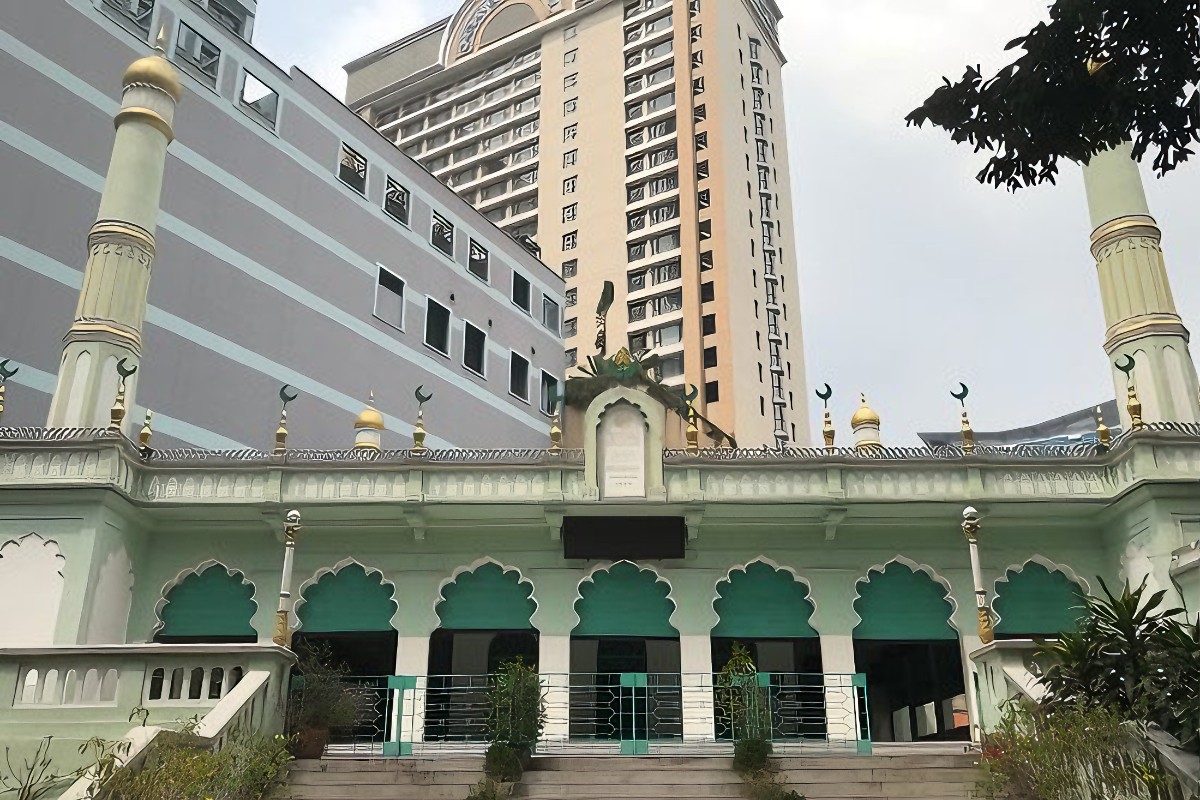
You wouldn’t expect to find a grand white-and-green mosque tucked between five-star hotels in the luxury corridor of District 1 — but that’s exactly what makes Saigon Central Mosque so special. Steps away from the Caravelle Hotel and a short walk from the Saigon River, the mosque rises with four elegant minarets against a skyline of glass towers and French colonial facades. It is, without question, the spiritual anchor for every Muslim traveler arriving in Ho Chi Minh City.
Also known as Jamia Al-Musulman Mosque or Dong Du Mosque, this is the most prominent of the city’s twelve mosques — and the one most visitors return to throughout their stay.
A Brief History: Built by South Indian Muslims in 1935
The mosque’s story begins in the 1930s, when a thriving community of South Indian Muslim traders had settled in French colonial Saigon. Completed in 1935, the building was originally a private sanctuary — a place of worship reserved for the Southern Indian Muslim community who had made Saigon their home.
Today, that exclusivity is long gone. The mosque welcomes Muslims from every corner of the world. Pakistanis, Indonesians, Malaysians, Arabs, and local Vietnamese Muslims gather here every day, and especially on Fridays when the courtyard and surrounding streets fill with worshippers. What began as a community-specific prayer hall has evolved into one of the most important Islamic centers in all of Vietnam.
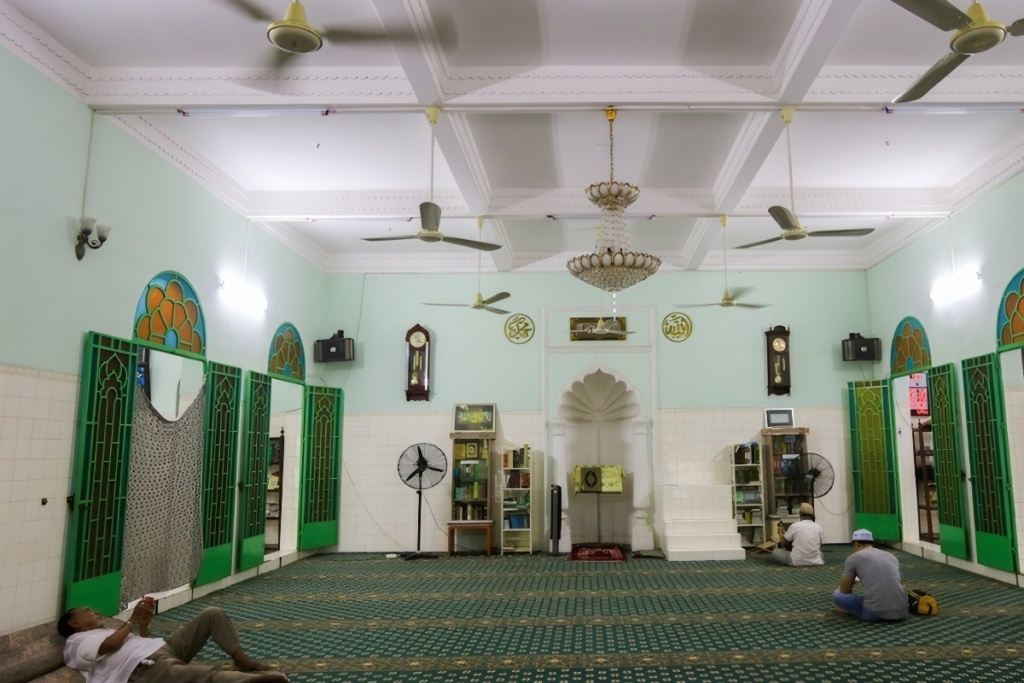
The architecture is a fascinating blend: Roman-style arched doorways — a nod to the colonial era — combined with four minarets, a white-and-green exterior, and a cool light-blue interior that feels distinctly, beautifully Islamic.
Visiting for Prayer: What to Expect
The mosque is open daily for all five prayers. Friday Jumu’ah prayer draws the largest congregation — worshippers begin arriving well before noon, and Dong Du Street fills with a remarkable diversity of Muslim communities united in worship. If your trip falls on a Friday, attending here is an experience unlike any other in Vietnam.
🕐 Prayer Times Tip
Prayer times shift daily. Use the Muslim Pro or Athan app to check accurate times during your visit. Arrive 10–15 minutes early on Fridays to find a good spot inside the main hall.
For sisters: There is no separate women’s section inside the main hall. Women are welcome to pray in the corridor area of the mosque. This arrangement is common in Vietnam’s mosques — bring your own prayer mat for added comfort. The mosque also has wudu (ablution) facilities on-site, along with a free cold water dispenser in the courtyard.
Dress Code & Visitor Etiquette
- Women should cover their hair and wear loose, full-length clothing covering arms and legs
- Men should wear long trousers — avoid shorts or sleeveless shirts
- Remove shoes before entering (shoe racks are at the entrance)
- Keep voices low inside — this is an active place of worship
- Photography is generally fine in the courtyard; ask permission before photographing worshippers
- Set your phone to silent during prayer times
🌟 From Fellow Travelers
Visitors consistently describe the atmosphere as remarkably warm and welcoming. Regulars often go out of their way to help first-time visitors with wudu procedures or finding a place to pray. Don’t hesitate to ask if you need guidance — you’ll be met with kindness.
Halal Food Near Saigon Central Mosque
One of the most practical advantages of this mosque is its location. Right outside the entrance, a lady near the courtyard regularly sells coffee, fresh lime juice, and light snacks — reportedly home to the best milk coffee in all of HCMC, according to Malaysian visitors. Street food stalls along Dong Du Street also cater to the post-prayer crowd.
Directly opposite the mosque, several small Vietnamese restaurants serve halal pho, rice dishes, and Indian-style curries at very reasonable prices. The mosque’s South Indian heritage means you’ll also find Pakistani and Indian dining options within easy walking distance.
For a wider halal dining experience, a short Grab ride opens up the full scene: Turkish restaurants, Malaysian food, and a growing number of certified halal eateries across District 1 and District 5. Use HalalTrip or Muslim Pro to find verified options near your hotel.
Other Mosques in Ho Chi Minh City
While Saigon Central Mosque is the most prominent, the city has twelve mosques in total. If you’re staying in a different district, these are worth knowing:
- Al-Rahim Mosque — 45 Nam Ky Khoi Nghia St, District 1. One of Vietnam’s oldest mosques (1885), primarily serving the Malaysian and Indonesian community.
- Cho Lon Mosque — 641 Nguyen Trai St, District 5. Located in Chinatown, welcoming the broader Southeast Asian Muslim community.
- Jamiul Islamiyah (Nancy Mosque) — 459B Tran Hung Dao St, District 5. Active community; halal pho available in nearby alleys.
- Jamiyah Islamic Mosque — 52 Nguyen Van Troi, Phu Nhuan. Managed by the Cham Muslim community.
How to Get There
Address: 66 Dong Du Street, Ben Nghe Ward, District 1, Ho Chi Minh City
The easiest way is by Grab — search “Saigon Central Mosque” or type “66 Dong Du.” From Ben Thanh Market, it’s roughly a 10-minute walk heading east along Le Loi before turning onto Dong Du Street; the green-and-white minarets are visible from the corner. From Tan Son Nhat Airport, expect 30–45 minutes by Grab (150,000–200,000 VND depending on traffic).
Nearby landmarks include the Caravelle Hotel, Bong Sen Hotel, and Sheraton Saigon — all within two minutes on foot. The Saigon River waterfront is a five-minute walk.
Best Time to Visit
Friday midday (Jumu’ah prayer) is the most vibrant time. The diversity of the congregation — locals, expats, tourists from across the Muslim world — makes it an unexpectedly moving experience in the middle of one of Southeast Asia’s most secular megacities.
During Ramadan, the atmosphere shifts beautifully — iftar gatherings are organised and the surrounding halal food scene becomes more active from the late afternoon onwards. On Eid al-Fitr and Eid al-Adha, large congregational prayers draw Muslims from across the city.
Weather-wise, Ho Chi Minh City is hot and humid year-round (28–35°C). The dry season (December–April) is the most comfortable time to explore on foot.
Practical Information at a Glance
- Address: 66 Dong Du Street, District 1, Ho Chi Minh City
- Opening hours: Daily, 8:00 AM – 8:00 PM
- Phone: +84 28 3824 2903
- Admission: Free. Non-Muslims are generally not permitted inside during prayer times.
- Wudu facilities: Yes, on-site
- Women’s prayer area: Corridor area — no dedicated room. Bring your own prayer mat.
- Nearest halal food: Street stalls directly outside, restaurants opposite
- Nearest landmarks: Caravelle Hotel, Sheraton Saigon (2 min walk)
Final Thoughts
Saigon Central Mosque is more than a practical stop for daily prayers — it is a living piece of history that reveals a side of Vietnam most visitors never discover. Standing in the cool interior, hearing the adhan echo between glass towers and colonial rooftops, you’re reminded that Islam has been present in this corner of Southeast Asia for nearly a century.
Whether you’re in Ho Chi Minh City for a weekend stopover or spending weeks exploring Vietnam, make time for Dong Du Street. The mosque will ground your journey — and the coffee outside might just become the best you’ve had all trip.
📌 Plan Your Visit
Pair your mosque visit with Ben Thanh Market (10 min walk) and a riverside walk along the Saigon River. The whole District 1 loop takes a relaxed half-day — perfect for your first morning in HCMC.